

4-Axis CNC Milling
Custom precision parts manufactured from drawing review and process engineering through prototyping and stable volume production.
Process Overview
Engineered for stable, repeatable production
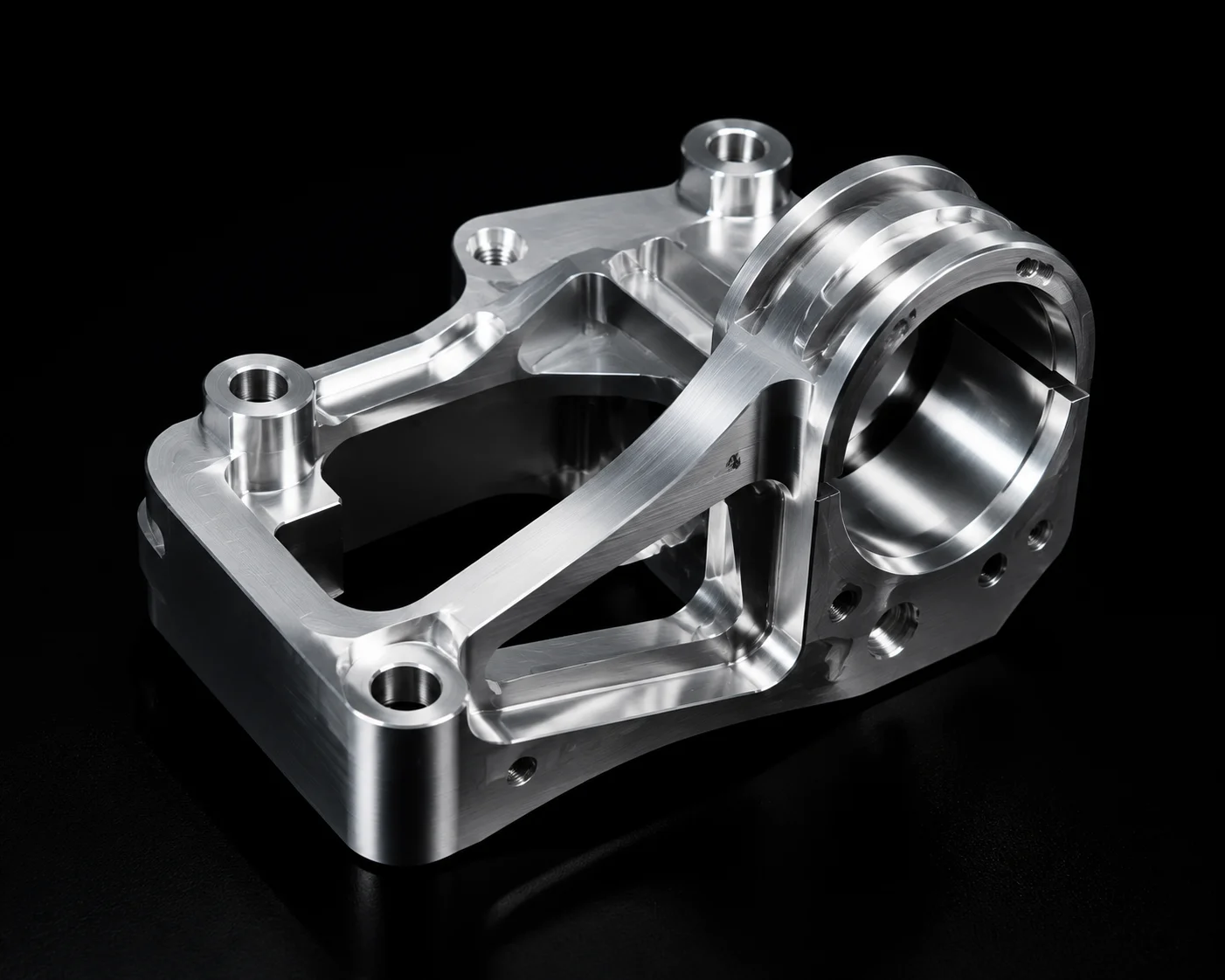
Verto’s 4-axis CNC milling service adds a rotary axis to conventional 3-axis machining. The workpiece can be rotated so that multiple sides, radial holes, slots, and circumferential features can be machined with fewer setups. This improves feature alignment, repeatability, and overall production efficiency.
Technical Data
Capability parameters
Available equipment and process options are matched to part geometry, material, tolerances, surface requirements, and production volume.
Supported Materials
- Aluminum
- Stainless Steel
- Carbon Steel
- Tool Steel
- Titanium
- Copper
- Brass
- Engineering Plastics
- Special Alloys
Key Advantages
Why choose this process
Quality Assurance
Inspection built into every production stage
Verto controls quality from incoming material through first-article inspection, in-process sampling, final inspection, and shipment verification.
- Dimensional Inspection CMM, projector, Swiss height gauge, and Mitutoyo micrometers.
- Material Verification Incoming inspection and hardness testing before production release.
- Process Control First-piece approval, patrol inspection, and in-process sampling.
- Delivery Assurance Full final inspection supports on-time, specification-compliant delivery.
Applications
Precision parts for demanding industries
Manufacturing support for communications equipment, medical devices, digital imaging, electronics, drones, and industrial automation.
4-axis CNC milling is suitable for valve components, manifolds, housings, shafts with milled features, fixtures, medical components, and parts requiring holes, slots, or other features around their circumference.
FAQ
Frequently asked questions
When should I choose 4-axis CNC milling?
Choose 4-axis milling when a part requires machining on multiple sides or includes radial and circumferential features that would otherwise require several manual setups.
What is the difference between 3-axis and 4-axis milling?
A 4-axis machine includes an additional rotary axis that rotates the workpiece, allowing multiple sides and rotational features to be machined more efficiently.
Build your next precision component with Verto
Send your drawings, samples, tolerances, material requirements, and expected quantity for an engineering and manufacturability review.