
3+2 Axis Machining
Custom precision parts manufactured from drawing review and process engineering through prototyping and stable volume production.
Process Overview
Engineered for stable, repeatable production
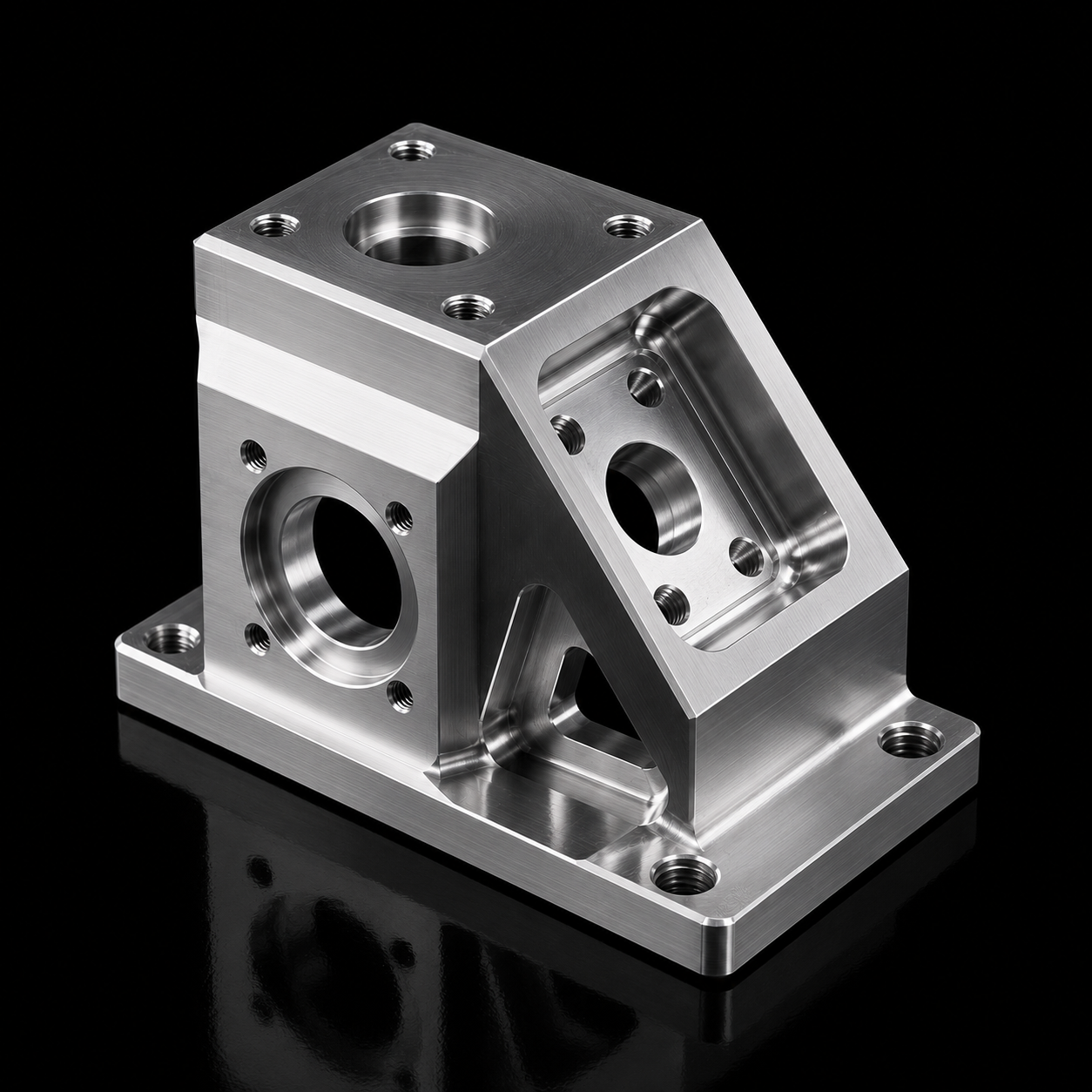
Verto’s 3+2 axis machining service uses two rotary axes to position the workpiece before machining with three linear axes. This method provides efficient access to multiple faces and angled features while maintaining a stable cutting position and accurate feature alignment.
Technical Data
Capability parameters
Available equipment and process options are matched to part geometry, material, tolerances, surface requirements, and production volume.
Supported Materials
- Aluminum
- Stainless Steel
- Carbon Steel
- Tool Steel
- Titanium
- Copper
- Brass
- Engineering Plastics
- Special Alloys
Key Advantages
Why choose this process
Quality Assurance
Inspection built into every production stage
Verto controls quality from incoming material through first-article inspection, in-process sampling, final inspection, and shipment verification.
- Dimensional Inspection CMM, projector, Swiss height gauge, and Mitutoyo micrometers.
- Material Verification Incoming inspection and hardness testing before production release.
- Process Control First-piece approval, patrol inspection, and in-process sampling.
- Delivery Assurance Full final inspection supports on-time, specification-compliant delivery.
Applications
Precision parts for demanding industries
Manufacturing support for communications equipment, medical devices, digital imaging, electronics, drones, and industrial automation.
3+2 axis machining is suitable for angled holes, multi-face housings, precision brackets, fixtures, mold components, aerospace parts, automotive components, and parts requiring machining from several fixed orientations.
FAQ
Frequently asked questions
What is the difference between 3+2 axis and 5-axis machining?
In 3+2 axis machining, the rotary axes position the workpiece and remain fixed during cutting. In simultaneous 5-axis machining, all five axes can move together while the tool is cutting.
When is 3+2 axis machining the better option?
It is often more cost-effective when a part requires accurate angled or multi-sided features but does not need continuous simultaneous 5-axis movement.
Build your next precision component with Verto
Send your drawings, samples, tolerances, material requirements, and expected quantity for an engineering and manufacturability review.